



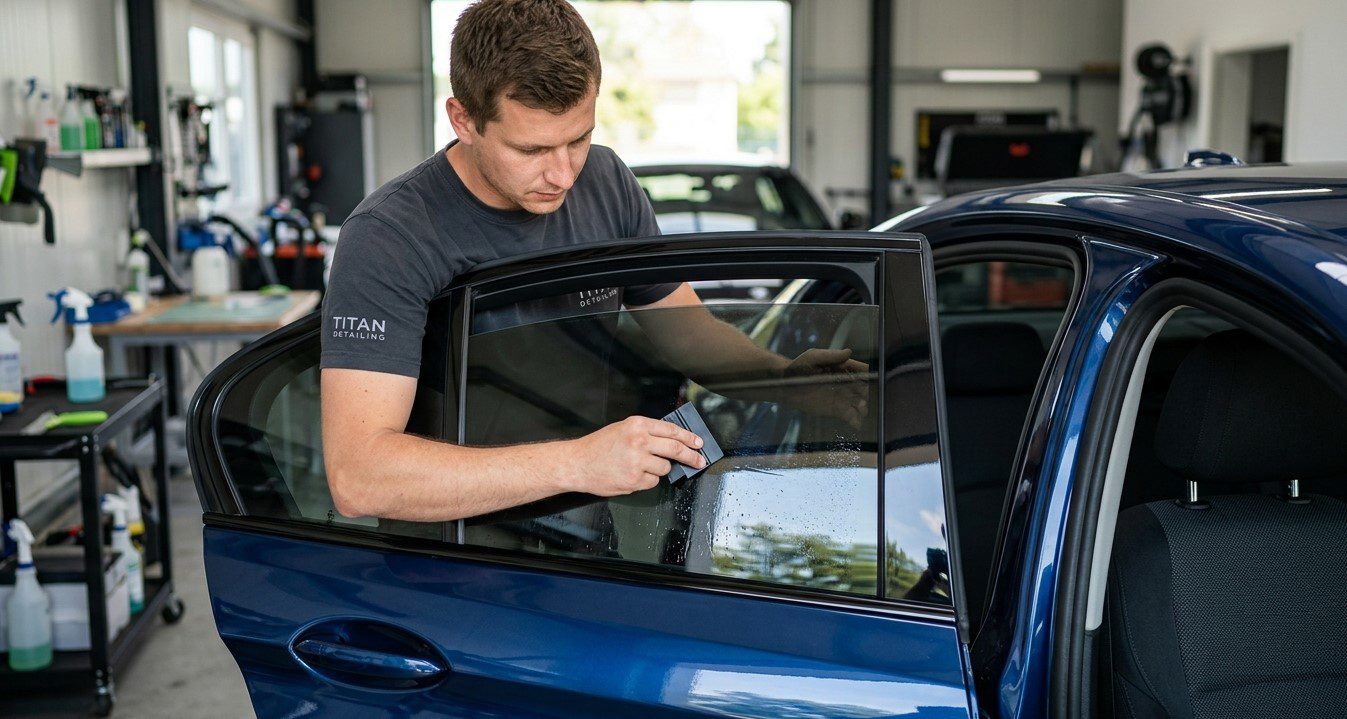
One of the first queries car drivers make before arranging for window tinting services is how much to tint car windows. No single price due to the price depending on the vehicle, film, coverage and installation process. Standard window tint done for a more modest amount of money. While more extensive and professional window tint systems can be a bit more expensive.
Rather than think about the minimum estimate, ponder about the standard of film, the installer’s experience, the amount windows you have and the protection you require.
Vehicle Size and Number of Windows
Size of vehicle plays an important role in pricing. This rule applies to a compact sedan in comparison to the other vehicles: an SUV, a crossover, a truck or a van. This is particularly the case with a compact sedan versus an SUV, a crossover, a truck or a van. There is a relationship between window size and amount of film required, so larger windows require more film, and for this reason, will increase the total cost.
Window tint darkness is also a factor with tinting. Some drivers only tint rear windows, or all fronts, rear windows and sunroof. The more the coverage, the more materials will involve.
The price can also vary depending on the complexity of the shape of the window. It may take a longer time to prepare and install curved glass, tight edges and unusual designs for a clean finish.
Type and Quality of Tint Film
Price depend on the film. Products provide different amounts of heat rejection, UV protection, durability, glare and optical clarity. Films that are less expensive or lower cost, are typically dyed films. Advanced ceramic or high-performance ceramics will be more expensive.
If choosing an automotive tint film in comparison, keep an eye on more than the level of tint or dark. Similar looking two movies can exhibit varying heat control characteristics, fading, and life. A tint for car effectively retains its transparency with an appropriate installation.
A higher grade film for those who spend a lot of time on the roads can be more useful.
Ceramic and Premium Tint Options
Sometimes, the highest quality auto window tint film is a little more expensive due to the advanced tinting film materials and other performance benefits it offers. For instance, ceramic tint is intended to give high protection. From both heat and UV rays, without compromising your ability to see clearly. It can be perfect on the driver who wants the needed cabin comfort, without opting for a very dark tint.
When looking into the best automotive window tint film, look at infrared rejection, UV protection, visible light transmission, optical clarity and the coverage provided by the auto window tint film warranty.
The film is not the only aspect of the story. Professional preparation and installation are important. As even automotive tint film can look horrible if it is cut incorrectly, not properly applied or installed on poorly cleaned glass.
Installation Quality and Labor
Labour will make a big difference in coming up with an actual estimate. Glass preparation, measurement, accurate cutting of film, careful application, and inspection are all processes done by the experienced glass installer. When it comes to how much to tint car windows, it’s a matter of time and skill.
If the price is extremely low, it could mean that they are quoting materials that are cheap, low experience, low prep work, or low coverage. When looking to book, inquire if the estimate includes movie, installation, removal of old tint, cleaning and warranty.
Removing Existing Window Tint
If you have an old tint on your vehicle, they may need to put it back on when removing it. Old film can turn brittle, fade, bubble or stick to the surface of the glass.
Some installers might also bundle removal with the price of installing it. If requiring the removal of old film, obtain an exact, definite quotation prior to beginning work.
Vehicle Condition and Window Accessibility
Window condition may affect installability. Where existing adhesive or residue, damaged seals, or dirt are remnants, more preparation may be necessary. Hard to reach windows may take longer.
For best results, call a professional installer to check out the vehicle before quoting a final price.
Choosing Tint That Fits Your Budget
Before you start to see how much to tint car windows, you must figure out what you obtain from the tint. Does appearance, interior comfort, UV protection, heat reduction, privacy or a combination of these complement your primary concern?
When looking for the best automotive window tint film, if the performance comes into consideration more than the initial cost, it might be worth it to do some research. Consider the product’s specifications, warranties, expected life, and installation experience, rather than the price.
Getting an Accurate Quote
The best method for finding out about how much to tint car windows is to get a detailed quote on the car in question. If possible, include as much information as possible. About the make, model, year, desired window tint, current window tint, and the type of tint.
Inquire to installer about what is included. When comparing different detailed estimates, you may be able to identify the real value from the low bid that omits the necessary costs.
Final Thoughts
The amount of tint on car windows is based on a number of factors. Instead of a single car window tint percentage. The final cost can be influenced by the size of the vehicle, number of windows, Quality of the Tint Film, the complexity of installation, removing old tint film and experience of the installer.
When working out how much to tint car windows, it is not just about finding the tiniest window tint. Take into account when you’re going to be driving, how long you expect the car to be around and how often you drive your car outdoors. This information will aid you to determine if you require a basic form or some more high performance based product for general.
When properly installed, a well-fitted film can deliver comfort, look and protection for many years. Research options, request specific questions, and select a service that offers affordable pricing and trustworthy installation.
FAQs
1. How much does it cost to tint car windows?
The cost varies based on the vehicle size, number of windows, tint film type, installation complexity, and whether old tint needs to be removed.
2. What factors affect car window tinting prices?
Vehicle size, window count, film quality, tint coverage, glass shape, installation time, and the condition of existing tint can all affect the final price.
3. Is ceramic window tint more expensive?
Yes. Ceramic tint generally costs more than basic dyed films because it offers advanced heat rejection, UV protection, durability, and optical clarity.
4. Does the size of my vehicle affect tinting costs?
Yes. Larger vehicles such as SUVs, trucks, crossovers, and vans typically require more film and installation time than smaller cars.
5. Does tinting more windows increase the total cost?
Generally, yes. Tinting additional windows requires more material and labor, so full-vehicle coverage usually costs more than tinting only selected windows.
6. Does removing old window tint cost extra?
It can. Removing old film may require additional labor, particularly when the film is brittle, bubbled, faded, or leaves adhesive residue behind.
7. Is expensive automotive tint film always better?
Not necessarily. The right film depends on your priorities, including heat rejection, UV protection, visibility, durability, glare reduction, and budget.
8. Why does professional tint installation cost more?
Professional installation involves glass preparation, precise measurements, careful film cutting, application, and inspection. Experience can also help produce a cleaner finish.
9. How can I get an accurate window tinting quote?
Provide the installer with your vehicle’s make, model, and year, along with the windows you want tinted, existing tint condition, and preferred film type. An in-person inspection can provide a more precise estimate.
10. What should I consider besides the price of window tint?
Consider film quality, warranty coverage, expected lifespan, heat and UV protection, optical clarity, installation quality, and how well the tint suits your driving needs.